Steriods and Peptides Evolution
The Debate: Steroids vs. Natural Bodybuilding
Jan
peptides for cognitive performance. The line between “natural” and “enhanced” bodybuilding is one of the most polarizing—and misunderstood—topics in fitness. Social media has blurred expectations, with influencers showcasing physiques that are often unattainable without pharmacological help.
This debate isn’t simply about morality or “cheating”; it’s a fundamental discussion about physiology, expectations, health, and the very nature of the sport.
Let’s cut through the noise and examine the real, evidence-based differences.
1. The Biological Reality: What Steroids Actually Do
First, it is critical to understand that steroids are not a “magic pill.” The hard work, discipline, and regimented diet required to build a top-tier physique remain non-negotiable, regardless of drug use.
However, anabolic-androgenic steroids (AAS) alter the physiological playing field in a way that training and diet alone cannot replicate.
AAS work by dramatically altering the hormonal environment. Enhanced athletes maintain elevated levels of muscle protein synthesis 24/7, significantly reduce muscle breakdown, and store more glycogen and water in their muscles, creating a constant anabolic state. peptides for cognitive performance
This is not simply doing the same work faster; it represents a completely different biological process.
Natural lifters, by contrast, are limited by their endogenous testosterone levels (typically 300–1,000 ng/dL). They experience short spikes in protein synthesis after training that return to baseline within 48 hours.
The difference is akin to comparing a sprint to a marathon one offers a brief burst, the other provides sustained, continuous progress.
2. Muscle Growth and the “Natural Limit”
The most significant difference between the two paths is the rate and total amount of muscle that can be built.
The Natural Trajectory
Muscle growth for natural lifters follows a predictable curve that slows dramatically over time:
- Year 1: 15–25 pounds of lean muscle (the “beginner gains” phase)
- Year 2: 8–12 pounds
- Year 3: 5–8 pounds
- Year 4–5 and beyond: 1–5 pounds per year, if that
Even under perfect conditions, most natural lifters will gain approximately 30–50 pounds of total muscle over their entire lifetime. This is a hard physiological ceiling.
The Enhanced Trajectory
Enhanced athletes operate in a completely different reality. In the first 1–2 years of use, they can gain 20–30+ pounds of lean mass per year. This is why someone enhanced can look like they’ve been training for a decade after just a year or two.
Furthermore, studies have confirmed this disparity. A scientific review found that individuals who used steroids and trained gained 3 times more muscle mass than the group that trained naturally. peptides for cognitive performance
Shockingly, even a group that took steroids and did not train gained 1.5 times more muscle than the group that trained naturally.
This is why certain physiques—particularly those that combine extreme size with razor-sharp conditioning—are simply not attainable naturally. The Fat-Free Mass Index (FFMI) is a metric used to quantify this. The natural ceiling is typically around FFMI 24–25, while enhanced athletes often score 26–30+.
3. Differences in Training and Recovery
The enhanced athlete’s ability to recover faster dictates a fundamentally different approach to training.
Natural lifters must carefully manage volume to avoid overtraining, as their recovery capacity is a limiting factor. Training each muscle group 2x per week is typical, and a hard leg session might require 48-72 hours of recovery.
The emphasis is on “picking and choosing battles,” keeping volume as low as possible to still stimulate growth while allowing adequate time for recovery.
Enhanced lifters, however, can train with significantly higher volume and frequency. Their faster recovery allows them to handle more total workload, which over time leads to a greater cumulative growth stimulus.
IFBB Pro bodybuilder Hunter Labrada explains that steroids greatly enhance recovery capabilities, enabling athletes to do more work. They can be ready to train the same muscle again in 24-48 hours or sooner.
4. The Visual Differences: What to Look For
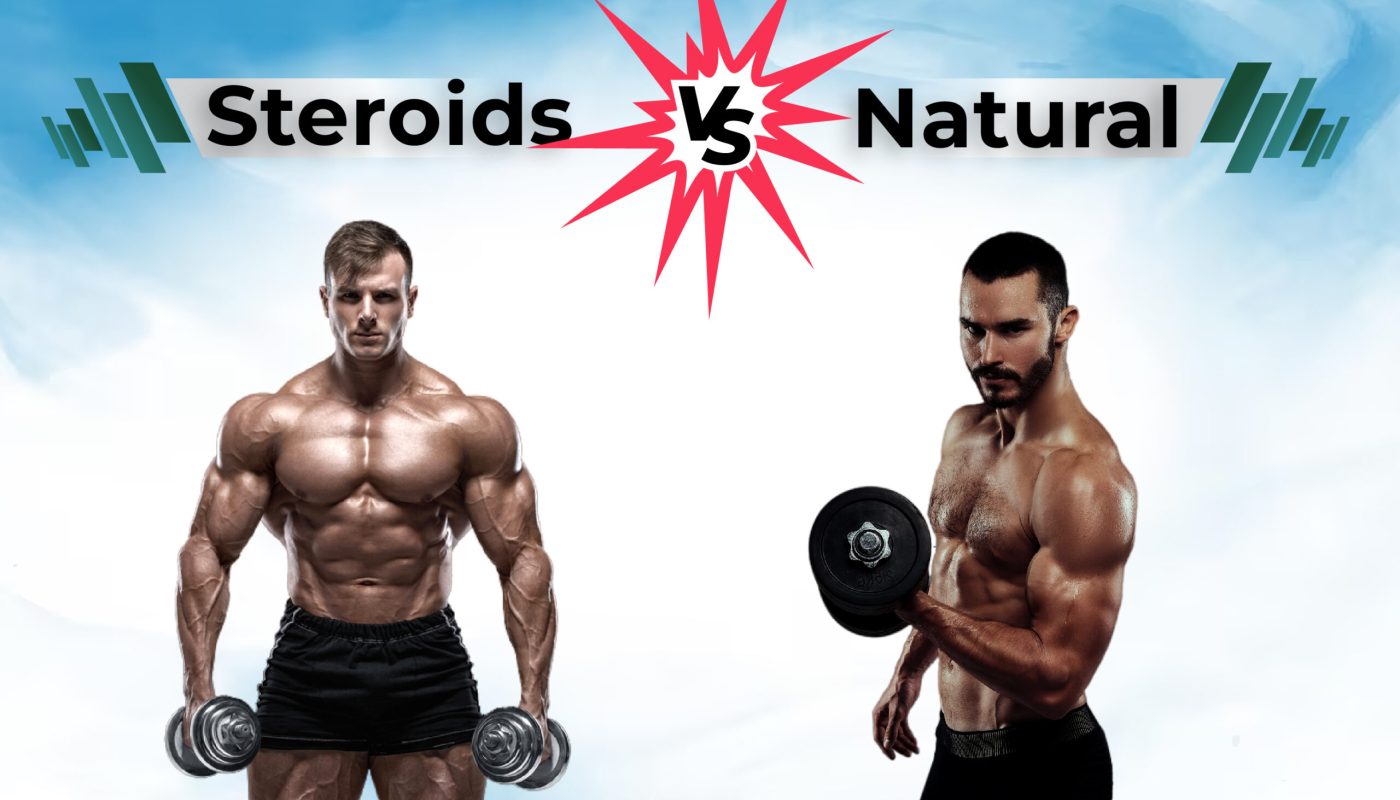
While not foolproof, enhanced physiques often have distinct characteristics that differ from their natural counterparts.
Natural Physiques tend to look athletic and aesthetic, with realistic proportions and a less “extreme” muscle fullness.
Enhanced Physiques are often characterized by:
- A dense, “3D” look with round, full muscles
- The ability to maintain size while being extremely lean (stage condition)
- Dramatic changes in a short period—for example, if someone wasn’t “show-ready” a week out and then suddenly appears super hard, dry, and dense
Furthermore, if a bodybuilder has gained 20 pounds of lean muscle within the last year, it’s highly likely they are enhanced. While a beginner can achieve this, an advanced lifter cannot do so naturally.
5. The Two Paths: A Summary of Trade-Offs
The choice between natural and enhanced bodybuilding is ultimately a choice between different sets of priorities.
6. The Social Media Problem and The Bottom Line
One of the biggest issues today is the false expectations created by social media. Many influencers claim to be natural when they are not, using lighting, pumps, and editing to present unrealistic timelines. This leads to frustration when natural lifters don’t see the same results in six months, a year, or even three years.
Natural bodybuilding is a long-term investment—it requires years of consistency, discipline, and realistic expectations. The results are impressive and sustainable but come slowly. Enhanced bodybuilding offers rapid, dramatic results but introduces significant, well-documented health risks.
The bottom line is this: if a physique seems too good to be true, it probably is. Understanding this distinction is what keeps expectations grounded and, ultimately, what leads to healthier, more successful fitness journeys.
