
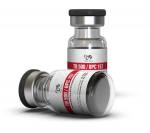
The combination of BPC-157 and TB-500 is often referred to as the “Wolverine stack” in some communities, named for its proposed role in accelerating tissue repair . However, it is crucial to understand that these are not FDA-approved for human use and are banned by the World Anti-Doping Agency (WADA) . The information below is for educational purposes and is based on common protocols found in community discussions.
🧪 Understanding the Combination
The idea behind using them together is that their mechanisms are thought to be complementary:
-
BPC-157: Believed to promote healing locally, often injected near the injury site. It may influence angiogenesis (new blood vessel growth) and collagen formation .
-
TB-500 (Thymosin Beta-4 fragment): Thought to work more systemically to promote cell migration and blood vessel formation, supporting broader tissue repair .
🔢 Reconstitution and Dosing
For a 5mg+5mg combined vial (total 10mg peptide), you need to choose an amount of bacteriostatic water to add for your desired concentration. Common community protocols suggest:
-
Option 1: Add 2mL of Bac Water
-
This gives a concentration of 2.5mg of each peptide per 1mL (or 250mcg per 0.1mL) .
-
For a typical daily dose of 250-500mcg of BPC-157, you would inject 0.1-0.2mL .
-
-
Option 2: Add 3mL of Bac Water
-
This gives a concentration of approximately 1.65mg of each peptide per 1mL .
-
This dilution is sometimes used for a weekly TB-500 dose.
-
Here are the dosages commonly discussed in forums for each peptide :
| Peptide | Common Dosage | Frequency |
|---|---|---|
| BPC-157 | 250 – 500 mcg | Daily |
| TB-500 | 2 – 2.5 mg | 1-2 times per week |
Important Consideration: Since both peptides are combined in one vial, dosing for TB-500 on its own schedule isn’t possible. If you inject a dose sufficient for your weekly TB-500, you are also administering a high dose of BPC-157. Some people instead opt for a lower, daily dose of the combination to keep the daily BPC-157 dose within a standard range .
A typical course is reported to last 4 to 6 weeks .
⚠️ Critical Safety Information and Lack of Evidence
-
Unapproved Status: BPC-157 and TB-500 are not approved by the FDA and lack robust human clinical trial data to confirm safety and efficacy .
-
Unknown Safety Profile: The long-term safety is unknown. While some early data appears favorable, significant research is still required .
-
Potential Risk: Because both peptides promote angiogenesis, there is a theoretical concern that they could stimulate the growth of existing, undiagnosed cancers. Comprehensive cancer pre-screening before use has been suggested . A review on therapeutic peptides noted a significant lack of long-term safety data and systematic validation for these types of peptides .
Be the first to review “TB 500/BPC 157 5mg+5mg”
Related products
Human Growth Hormones
Human Growth Hormones
Human Growth Hormones
Reviews
There are no reviews yet.